Los californios® Web Site
Padua Hills Theatre — The Mexican Players
Home Page
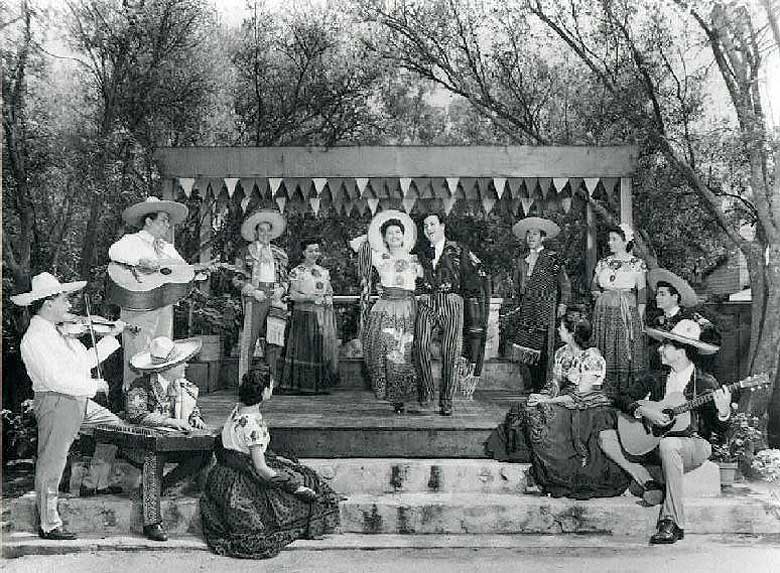
Theatre Image #1 — Historical photograph by Irene Welch Garner
Alfaro Family Collection
Members of The Mexican Players —
about 1950
In Summer the cast presented an after-theatre fiesta, called Jamaica, outside in this quiosco.
This appears to be the cast used for the performance of Festivales, as performed October 18 to November 25,
1950:
Gregorio Valadez, Catalino Alba, Francisco Velázquez, Hilda Ramírez de Jara, José O’Beso, Micaela
Velázquez,
Conchita (Concepción) Gallardo, Enrique Lerma, José Alba, Porfiria Lerma, Vida Amador, Mauricio Jara, Alfonso
Chávez
This web site will attempt to tell the unique story of
The Mexican Players at Padua Hills Theatre as a photo essay using pictures, programs, flyers and
first-hand reminiscences of the Players and their families. It is a work continually in progress, which
relies upon participation from visitors. If you have material (or usable scans of that material) that
you would like to contribute to the effort, please communicate with us at
info@loscalifornios.com. We especially need help
identifying the names of Players shown in the photographs, and we hope to add family histories
of their experience at Padua. Thanks to those who have already helped us: the Vera Family, Isabelle
Green, the Alfaro Family, Linda Hayes, and Nancy and Brian Hogan from the Fages family.
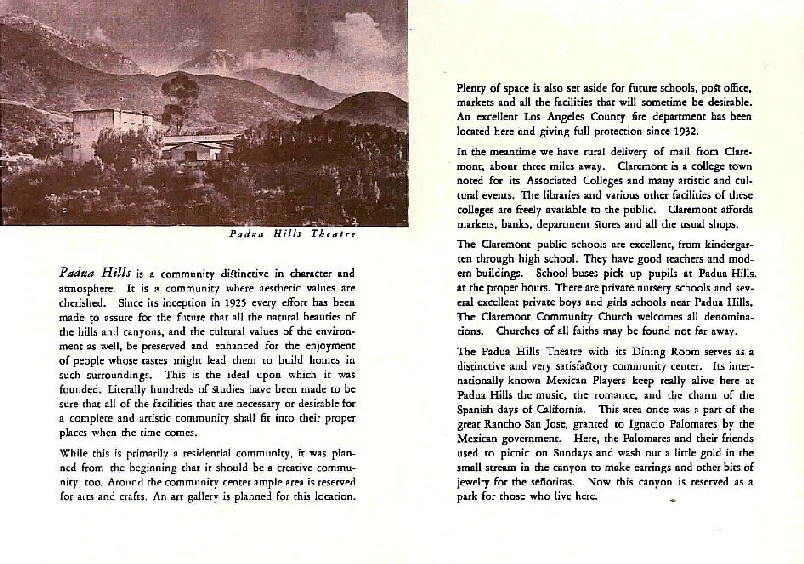
The Historic Physical Setting
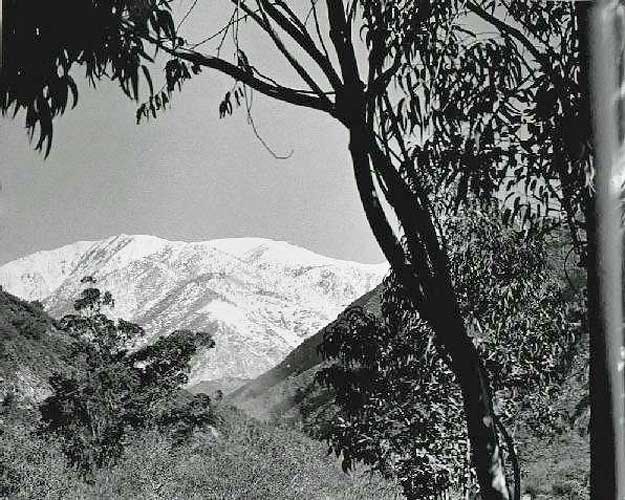
Theatre Image #2 — Historical photograph by Irene Welch Garner
Alfaro Family Collection
Padua Hills
In the 1920s a group of involved citizens from Claremont, California
banded together to purchase a large
tract of land in the beautiful foothills just outside town, land from the former Rancho San José that was
threatened with insensitive development.
They went to work to develop the area themselves in ways that would benefit their artistically conscious community,
calling their project area Padua
Hills.
Los Californios® Collection
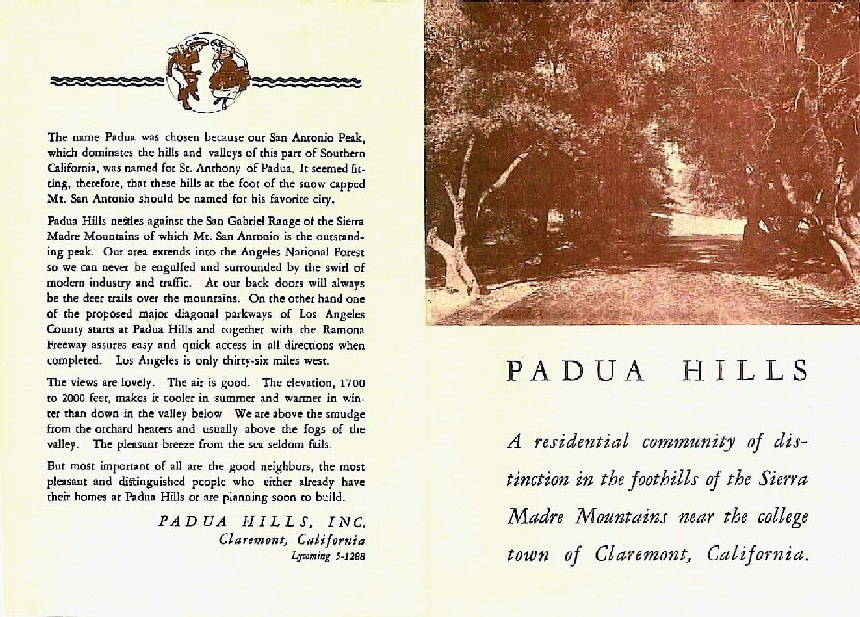
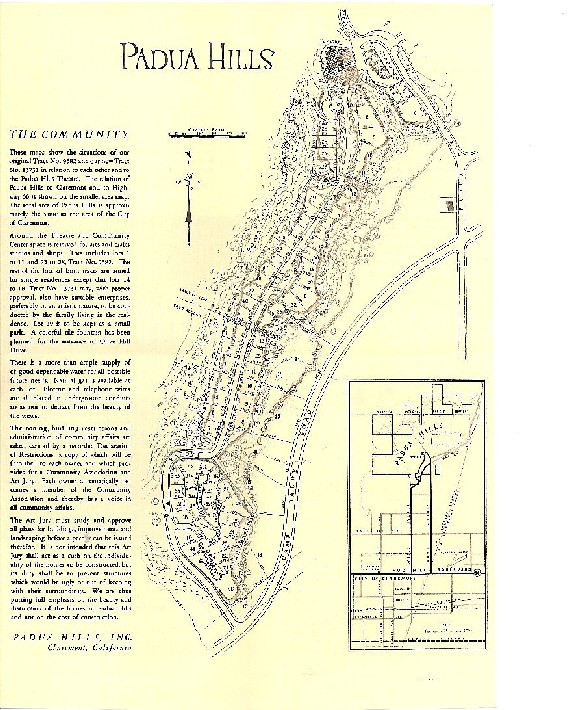
Promotional Flyer
Click on thumbnail images above to see larger
versions of this promotional flyer for the Padua Hills development.
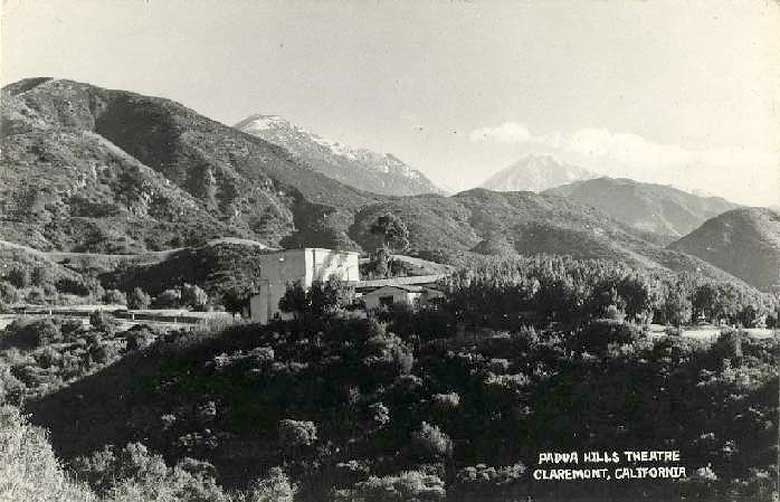
Theatre Image #3 — Photo attributed to Irene Welch Garner
Los Californios® Collection
Historic Postcard of Padua Hills
Theatre
Incorporated as Padua Hills, Inc. under the direction of Herman
Garner, the group subdivided the more than
2000 acres of land into residences for an artist community.
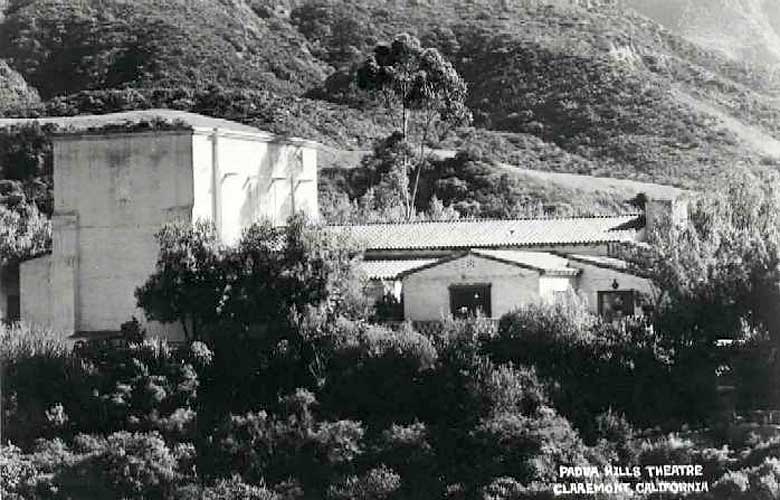
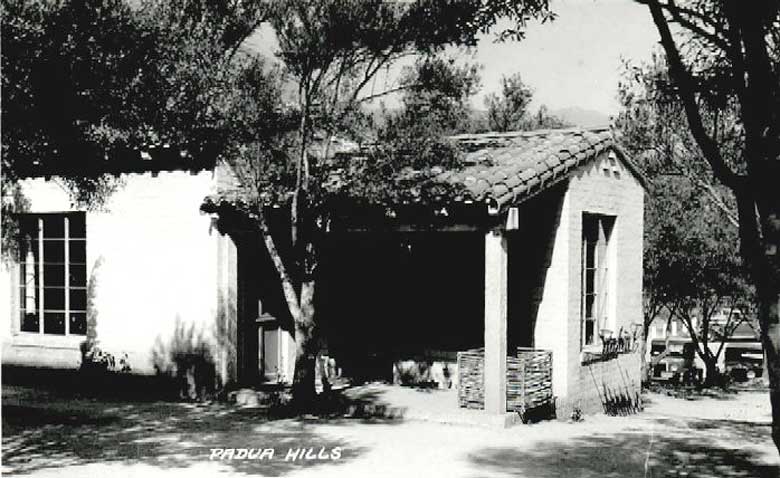
Theatre Image #4 — Photo attributed to Irene Welch Garner
Los Californios® Collection
Historic Postcard of Padua Hills
Theatre
As they formulated their plans for the area, they incorporated the
idea of an arts center as a central
focus for the development — a center with a dining room, arts studios and shops as well as a small
theater.
Theatre Image #5 — Photo attributed to Irene Welch Garner
Los Californios® Collection
Historic Postcard of Padua Hills
Theatre
In 1930 this vision came to fruition with the construction of the
Padua Hills Theatre, an elegant Spanish
Mission Revival style building designed by the Pasadena architect firm of Marston and Mayberry that included a
dining room and restaurant quality
kitchen, to be the home of the Claremont Community Players.
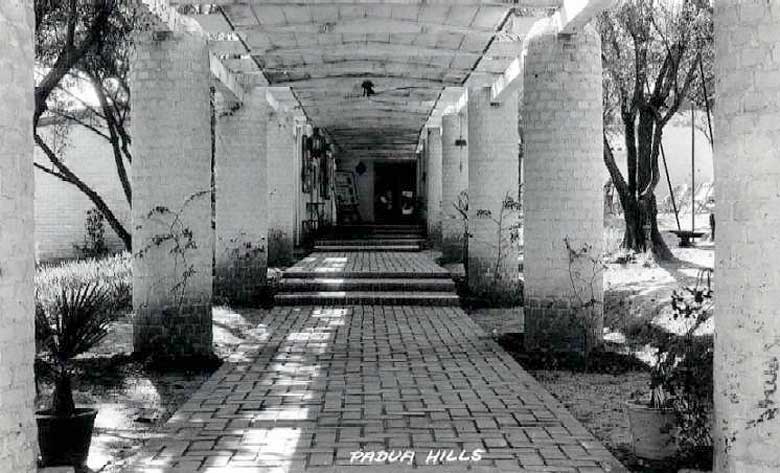
Theatre Image #6 — Photo attributed to Irene Welch Garner
Los Californios® Collection
Historic Postcard of Padua Hills Theatre
Entrance Way
The columned entrance to the theatre and dining room created an
inviting environment for cultural gatherings, and eventually became a well-recognized image symbolizing what soon
became an experiment that was radical for its time and unexpectedly
successful.
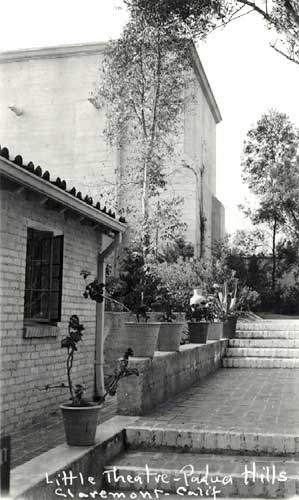
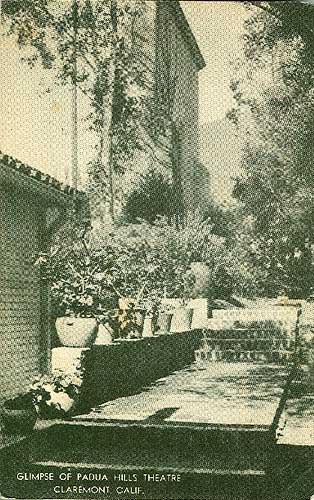
Theatre Images #7 & #8 — Photographs attributed to Irene Welch Garner
Los Californios® Collection
Historic Postcards of Little Theatre at Padua
Hills
Serene and elegant patios with artistic landscaping complemented the
building.
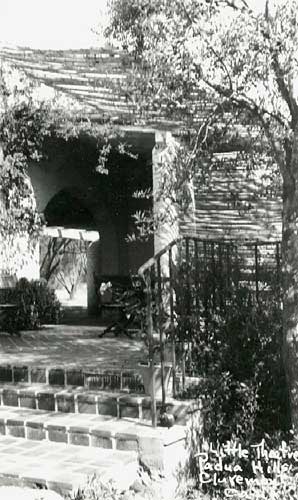
Theatre Image #9 — Photograph attributed to Irene Welch Garner
Los Californios® Collection
Another Historic
Postcard of Little Theatre at Padua HillsThe
Little Theater movement¹ was
still strong when plans for the Padua Hills development began. The Claremont community, which
still includes substantive participation from the university culture, was enthusiastic in its
support of the project.
Theatre Image #10 — Photo attributed to Irene Welch Garner
Los Californios® Collection
Historic Postcard of a studio in the Padua
Hills Theatre Complex
Theatre Image #11
Los Californios® Collection
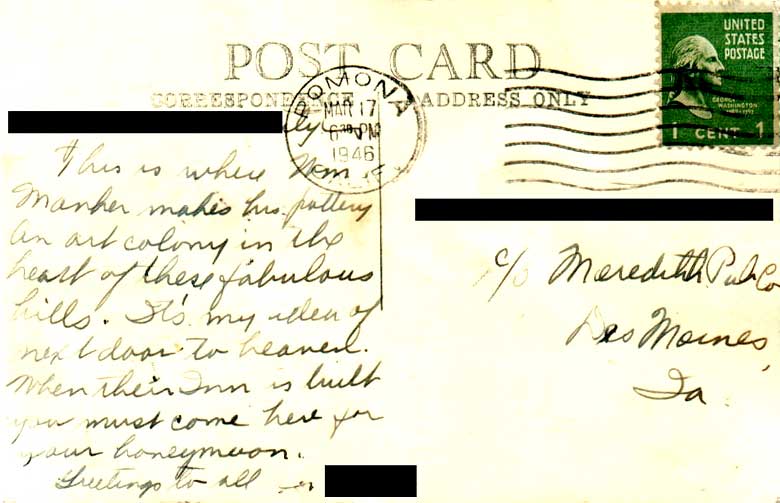
Back of postcard shown in Image
#10
This postcard, mailed March 17, 1946, says:
This is where Nom Manker makes his pottery. An art colony in the heart
of these fabulous hills. It’s my idea of next door to heaven. When
their inn is built you must come here for your honeymoon. Greetings to all.
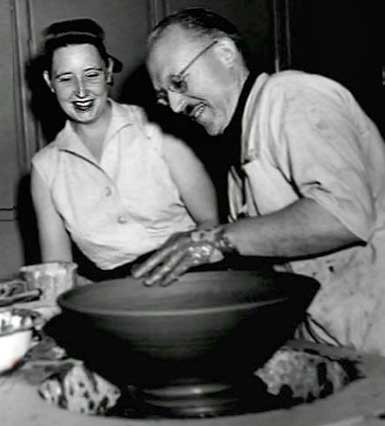
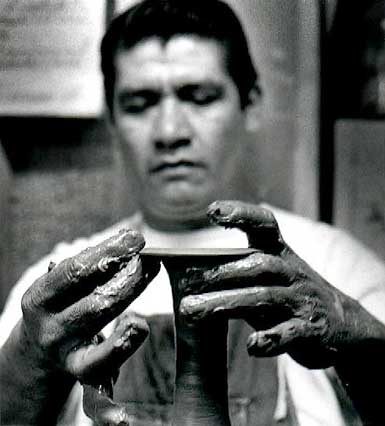
Theatre Images #12 & 13 — Historical photographs by Irene Welch Garner
Alfaro Family Collection
Martha Longnecker with potter at Padua Hills &
another potter
The work of Padua Hills artists is still sought after. Please help us
identify these artists.
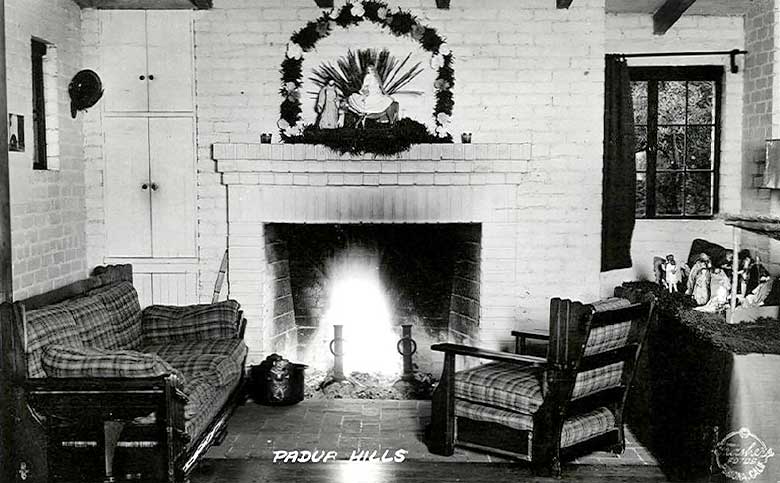
Theatre Image #14 — Photo attributed to Irene Welch Garner
Los Californios® Collection
Historic Postcard of an inside fireplace — Mailed in 1938
Theatre Image #15 — Photo attributed to Irene Welch Garner
Los Californios® Collection
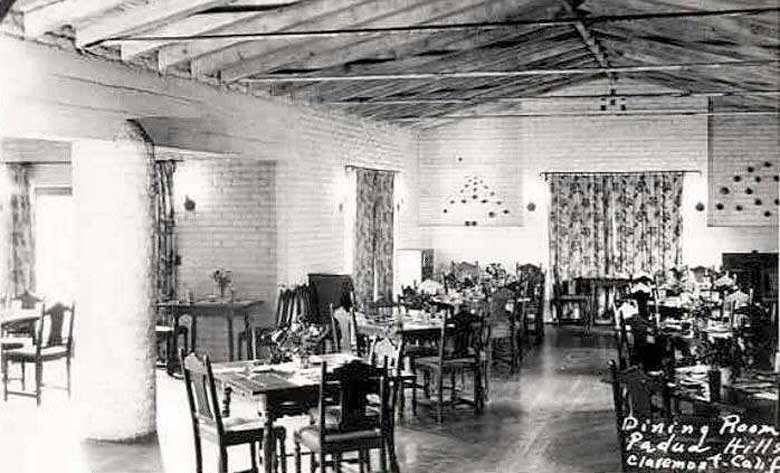
Historic Postcard of Padua Hills Dining
Room
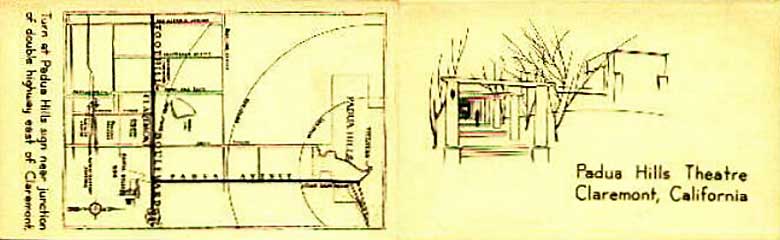
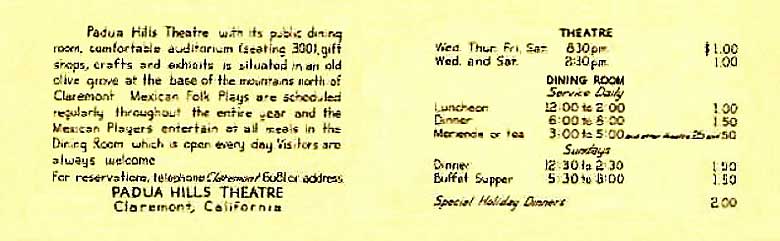
Los Californios® Collection
Folding Advertising Card for Padua Hills
Theatre and Dining Room
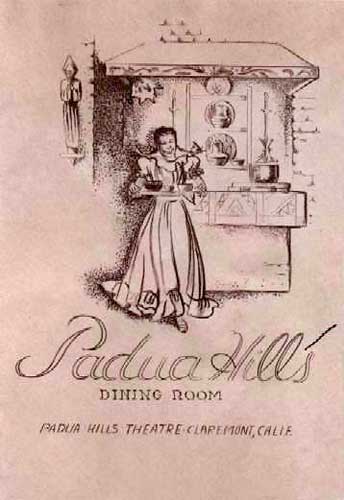
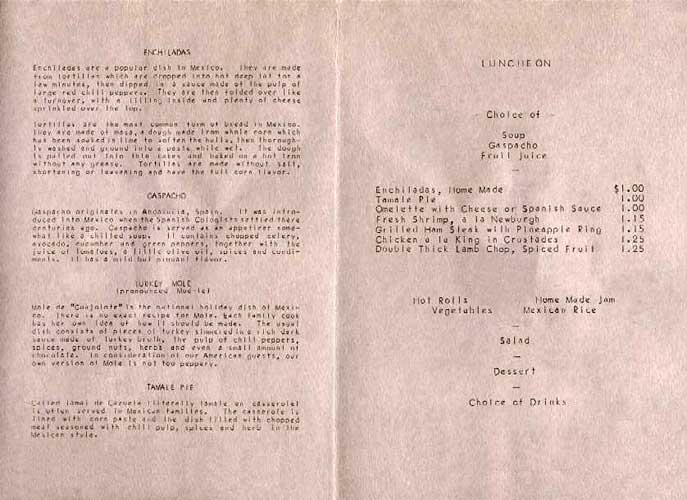
Theatre Image #16 — Los Californios® Collection
Padua Hills Dining Room Lunch
Menu

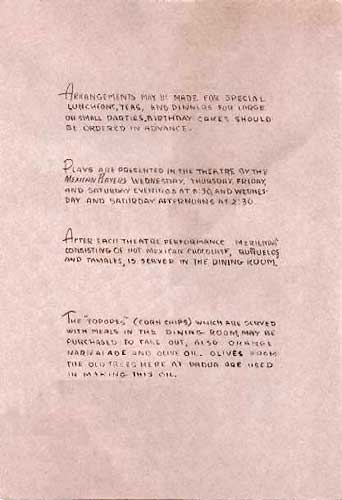
Theatre Images #17 & #18 — Los Californios® Collection
But the economic pressures of the Great Depression were
about to fundamentally change the mission of the Padua Hills Theatre. Click below for the next part of the
story.
The Physical Setting Today
Theatre Image #69 — Photo by Vykki Mende Gray
Los Californios® Collection
Entryway to Padua Hills Theatre and Dining
Room — February 2004
In 1998 the Padua Hills Theatre was placed on the National Register
of
Historic Places and on the California Register.
In October of 2003, devastating wild fires swept through much of
southern California. At the height of the fires,
firefighters were dispatched to protect the homes in Padua Hills.
Theatre Image #70 — Photo by Vykki Mende Gray
Los Californios® Collection
Padua Hills from the Theatre Parking Lot
— February 2004
When firefighters arrived, they found many of the homes already in
flames.
Theatre Image #71 — Photo by Vykki Mende Gray
Los Californios® Collection
Padua Homes as seen from the Theatre Parking
Lot — February 2004
The historic Little Theatre was directly in the path of the oncoming
flames, and the firefighters took a
stand to protect this treasured historical site. Even so, the fire came close.
Theatre Image #72 — Photo by Vykki Mende Gray
Los Californios® Collection
Padua Hills Theatre Clotheslines —
February 2004
Very close!
Theatre Images #73 & #74 — Photos by Vykki Mende Gray
Los Californios® Collection
Back of Padua Hills Theatre — February
2004
In fact, it’s astonishing that the Little
Theatre is still standing. But because of the efforts of those determined firefighters, there are still some homes
and the Theatre in Padua Hills.
While it sustained substantive damage in the fire, relatively little
of the building was affected.
Theatre Image #75 — Photo by Vykki Mende Gray
Los Californios® Collection
Damaged Roof Tiles on Back of Padua Hills
Theatre
February 2004
The historic sculpture by
Albert Stewart still graces the courtyard, and the
olive trees still shade the patios.
Theatre Image #76 — Photo by Vykki Mende Gray
Los Californios® Collection
Indian Woman — Terra-cota
sculpture made by
Albert Stewart in 1946.
This photograph taken in February 2004.
Theatre Image #77 — Photo by Vykki Mende Gray
Los Californios® Collection
Outside Wall of Padua Hills Dining Room —
February 2004
Photo by Vykki Mende Gray
Los Californios® Collection
Padua Hills Dining Room — February 2004
Other Resources About Padua Hills Theatre and The Mexican Players
Pauline B. Deuel, Mexican Serenade: The Story of the Mexican
Players, 1961, Padua Institute.
Matt García, A World of Its Own:
Race, Labor, and Citrus in the
Making of Greater Los Angeles, 1900 - 1970, 2001, The University of North Carolina Press. Pay particular
attention to chapter 4, Just Put on That Padua Hills Smile: The Mexican Players and the Padua Hills Theatre,
1931-1974, pages 121 - 154.
Matt García, Adjusting the Focus: Padua Hills Theatre and Latino
History,
Organization of American Historians: Magazine of History 10 (Winter 1996).
Matt García, Just Put on That Padua Hills Smile: The Mexican
Players and the Padua Hills Theatre, 1931-1974. California History 74, No. 3 (Fall 1995), pages 244 -
261.
Bess Garner, Notes in the Margin, Houghton Mifflin, 1937.
In her comments on her travels to Mexico, Bess Garner frequently relates events and her observations to her work
with the Theatre.
1 Matt García, A World of Its Own: Race,
Labor, and Citrus in the Making of
Greater Los Angeles, 1900 - 1970, 2001 provides background for the Little Theater movement as it applies to the
Padua Hills Theatre.
If your family has recollections of Padua Hills
Theatre that you would like to share on this web site,
please contact Los californios® at
info@loscalifornios.com.
Related Links
|
|
Adjusting the Focus: Padua Hills Theatre and Latino History,
By Matt García
Reveals an interesting and overlooked chapter in Hispanic cultural history. The Claremont,
California, Padua Hills Theatre presented Spanish-language, Mexican-theme musicals to a mostly white audience from
1931 to 1974. Although it presented romantic, and occasionally stereotypical views of Mexican American life, the theater deserves
recognition. (MJP)
The Commedia Dell'arte in a Mexican Folk Theatre
By Pauline B. Deuel
Hispania, Vol. 47, No. 3 (Sep., 1964), pp. 537-539
The Padua Hills Theater: Bringing a piece of history back to life
Padua Hills Theatre — National Register of Historic Places
Chanterelles Fine Catering at The Padua
Hills Theatre
|
©
Vykki Mende Gray, 2007
All rights reserved.
Los californios® is a registered
trademark belonging to
San Diego Friends of Old-Time Music, Inc.,
a California non-profit corporation.
|